

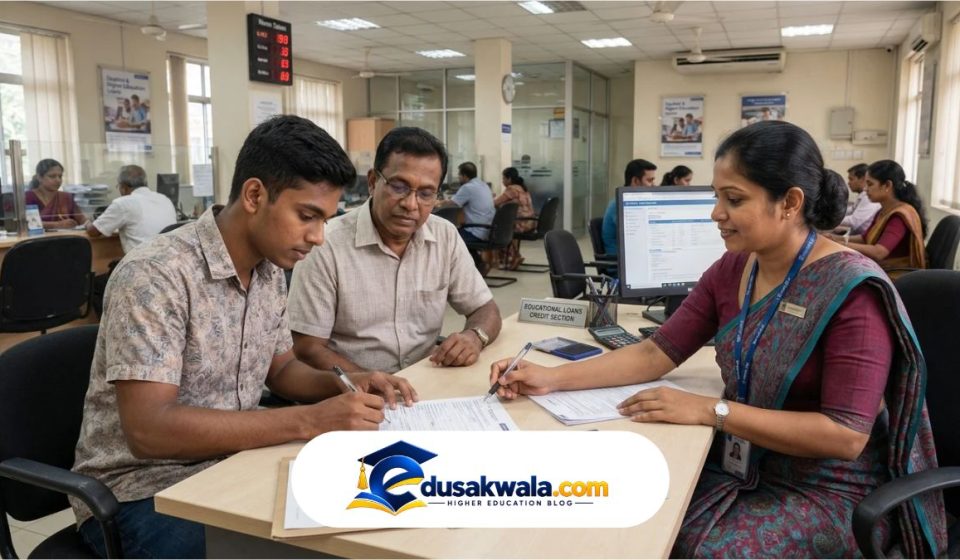
Education Loans in Sri Lanka: How to Compare Banks, Eligibility and Costs
Quick verdict: Education-loan limits, interest rates, security and repayment periods are bank-specific. Do not rely on a generic market range or assume that every bank offers the same unsecured facility. Compare the current written offer, total repayment and collateral conditions before signing. This guide includes only specific terms that could be confirmed from an official bank page.
Government scheme or commercial bank loan?
The Government Interest-Free Student Loan Scheme is a separate, intake-based programme for selected degree courses and eligible A/L applicants. Its limits and conditions are set by the Ministry and should be checked in the current handbook. It is not a general-purpose commercial education loan for every course or applicant.
Commercial bank loans may cover local or overseas education, but the borrower’s income, course, repayment capacity, age and security requirements are assessed by the bank. A bank’s advertised “up to” amount is not a guaranteed approval.
Verified example: DFCC Education Loan
DFCC’s official Education Loan page states that the facility can support local and overseas education and may cover tuition fees and related expenses. The bank advertises repayment over up to 10 years. Its published eligibility information includes a minimum monthly income of LKR 100,000 (basic salary plus fixed allowances) and age limits that vary by employment or professional-practice category.
DFCC says collateral is not necessarily required, but property documents are required if the loan is backed by a mortgage. The bank lists identity, income, course-fee and employer salary-assignment documents among the application requirements. It also states that approval may take 5–10 business days when complete documents are submitted. These are DFCC’s published conditions; the bank’s credit assessment and current offer remain decisive.
What to compare across banks
| Item | What to obtain in writing |
|---|---|
| Interest rate | Fixed or variable rate, calculation method and revision conditions. |
| Loan amount | Approved amount and whether tuition, accommodation, travel or equipment are eligible. |
| Repayment period | Maximum tenure, grace period and first instalment date. |
| Security | Mortgage, fixed deposit, salary assignment, guarantor or other security. |
| Fees | Processing, valuation, legal, insurance and early-settlement charges. |
| Disbursement | Payment to the institution, student or overseas recipient, and required evidence. |
Documents commonly requested
Requirements differ by bank and loan structure. A bank may ask for the applicant’s identity documents, proof of income, course offer and fee letter, sponsor or co-borrower details, and property documents if a mortgage is proposed. Ask the selected bank for its current checklist rather than assuming this list is exhaustive.
Estimate affordability before borrowing
Ask the bank for a repayment schedule showing the instalment, total interest, all charges and the amount payable if the rate changes. Compare the instalment with stable household income after essential expenses. For a foreign-currency loan or overseas course, consider exchange-rate movements and the timing of tuition payments.
Before signing
- Obtain a written offer with the effective interest rate and all fees.
- Check whether the rate is fixed or variable.
- Read the guarantor and collateral clauses carefully.
- Confirm the disbursement process and any required student banking arrangements.
- Keep the signed agreement and full repayment schedule.
Frequently asked questions
Does DFCC publish a single maximum loan amount for every applicant?
The official page describes flexible loan amounts based on course requirements and repayment capacity; obtain a specific written offer from the bank.
Does every education loan require property collateral?
No universal rule applies. DFCC says collateral is not necessarily required, but other cases and banks may impose security. Check the specific offer.
Is the Government IFSLS the same as a bank education loan?
No. It is a separate government scheme with its own intake eligibility, approved courses and loan limits.
Editorial Transparency & AI-Assistance Notice
This article was prepared with AI assistance and reviewed by the EduSakwala editorial desk. Factual claims and figures are linked to the official sources identified below. We do not present unverified estimates as confirmed facts. Rules, fees, exchange rates and institutional policies may change; readers should check the latest official guidance before applying or making payments.
Primary sources: DFCC Bank official Education Loan; Ministry IFSLS information.
Corrections and official updates: contact@edusakwala.com.