

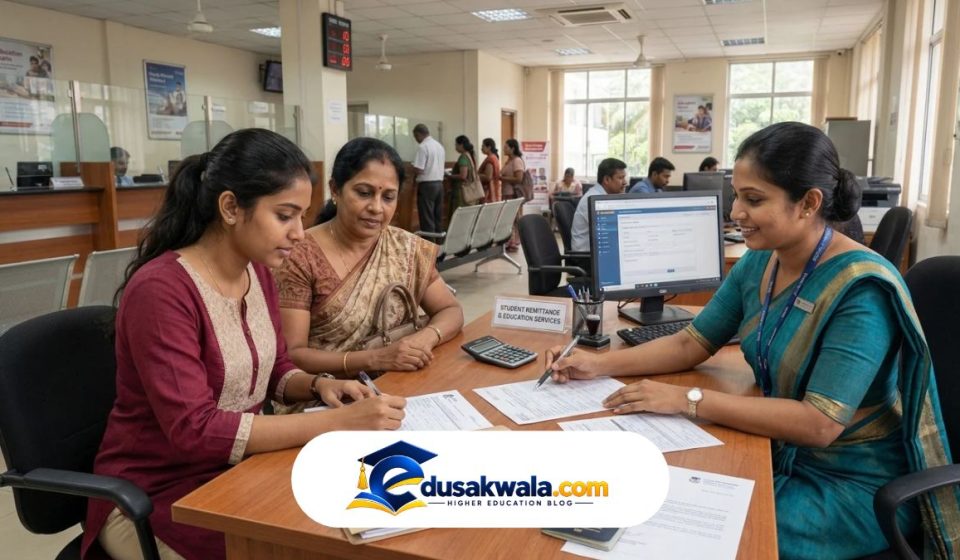
How to Open a Student Bank File in Sri Lanka for Overseas Studies
Quick verdict: Sri Lankan students commonly work with a bank’s foreign-exchange or international-banking team to arrange tuition and living-cost payments abroad. However, the Central Bank material reviewed does not establish that every student is legally required to open a product formally called a “Student File” or submit one universal Form A2 checklist. Banks may use internal student-file procedures to verify the purpose and documents for a remittance. Confirm the current process with the bank that will make the transfer. This is also connected to EduSakwala’s education financing options.
What the Central Bank rules say
The Central Bank of Sri Lanka’s Foreign Exchange Act directions describe circumstances in which an authorised dealer (such as a licensed bank) may process foreign-exchange transactions after verifying that the transaction is genuine and obtaining relevant supporting documents. Direction No. 02 of 2021 includes provisions for remittances in advance for living expenses for a person who has applied for a student visa, subject to bona-fide verification and documentation. The bank must apply the current directions and any later amendments or instructions.
This is different from claiming that a specific “Student Exchange File” is a statutory document required in every case. The bank may request a file or a particular form as part of its own compliance and processing procedure.
Documents to ask your bank about
Depending on the destination, payment and bank, the foreign-exchange team may request:
- Passport and identity documents;
- University offer or admission letter and course details;
- Invoice showing tuition fees and payment deadline;
- Visa, CAS, CoE or other immigration evidence where applicable;
- Evidence of accommodation or living-cost requirements if remitting maintenance funds;
- Source-of-funds evidence and sponsor details;
- Beneficiary bank details and payment instructions supplied by the institution.
This is a preparation list, not a guaranteed or exhaustive statutory checklist. Ask your selected bank for its latest document list and whether it requires Form A2 or any bank-specific declaration for your transaction.
Step-by-step preparation
- Choose a bank authorised to handle the relevant foreign-exchange transaction and contact its foreign-exchange department.
- Explain whether you are paying tuition, accommodation, living expenses or another education-related cost.
- Provide the official invoice and institution payment instructions.
- Ask which visa or admission documents are required for the particular remittance.
- Confirm the exchange rate, bank charges, correspondent-bank fees, transfer timeline and payment reference.
- Keep the remittance advice, bank receipt and confirmation from the overseas institution.
Important checks before sending money
- Verify the recipient account details directly with the institution using a trusted contact channel.
- Confirm the currency and exact amount due.
- Ask whether the bank can remit the funds before the visa is granted or only after additional evidence is provided.
- Do not assume a transfer will be approved until the bank completes its checks.
- Keep evidence of the source of funds, especially for large deposits or sponsor transfers.
Frequently asked questions
Does CBSL require every student to open a formal Student File?
The CBSL direction reviewed describes authorised-dealer remittance permissions and documentary verification; it does not establish one universal named student-file product for every student. Banks may use their own student-file procedures.
Is Form A2 always required?
Do not assume so. Ask the bank which forms and supporting records apply to your particular transaction.
Can tuition be paid before the visa is issued?
That depends on the payment purpose, bank checks and the applicable foreign-exchange directions. Ask the authorised bank before making commitments.
Related EduSakwala guides
- Student Visa Proof of Funds: UK, Australia and Canada Rules
- IELTS vs PTE in Sri Lanka: Fees, Difficulty and Visa Acceptance
- Education Loans in Sri Lanka: How to Compare Banks, Eligibility and Costs
Editorial Transparency & AI-Assistance Notice
This article was prepared with AI assistance and reviewed by the EduSakwala editorial desk. Factual claims and figures are linked to the official sources identified below. We do not present unverified estimates as confirmed facts. Rules, fees, exchange rates and institutional policies may change; readers should check the latest official guidance before applying or making payments.
Primary sources: Central Bank of Sri Lanka – Foreign Exchange Act Directions No. 02 of 2021; CBSL authorised dealers information.
Corrections and official updates: contact@edusakwala.com.